

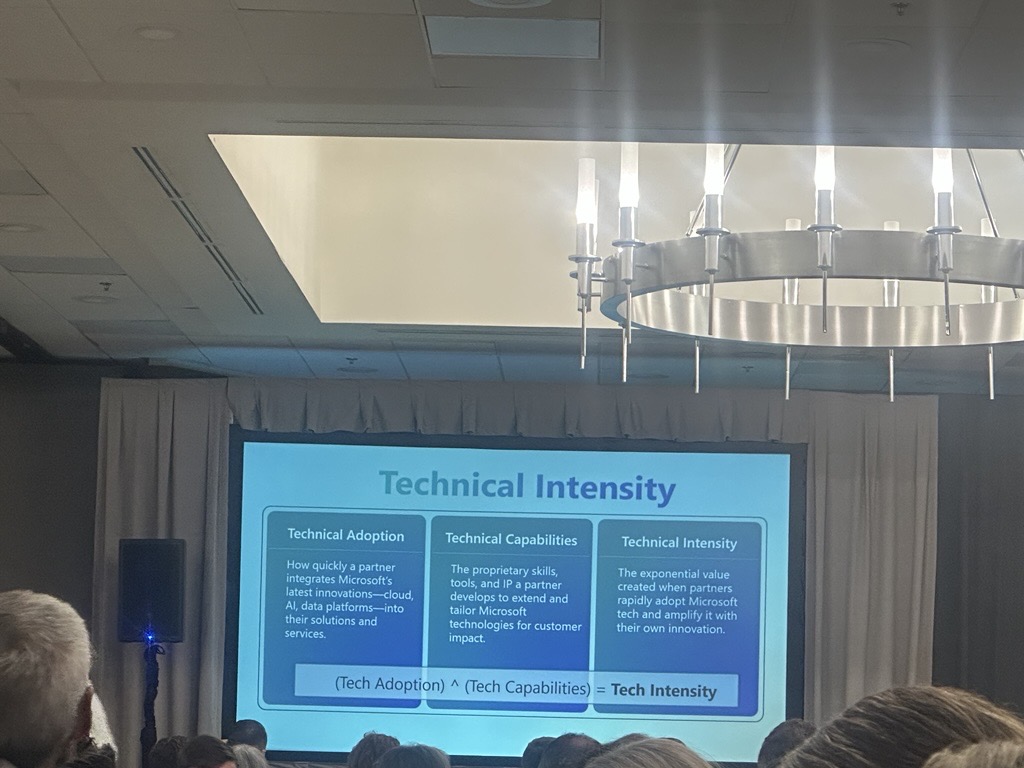
Technical intensity, which combines technical adoption and technical capabilities to create exponential value for organizations, is about how quickly a partner integrates Microsoft’s latest innovations and invests in growing their technical skills.
Lori Borg, Vice President GTM, GPS, Microsoft, emphasized that the goal is not just learning technology, but transforming how you work and innovate, ultimately driving business growth and competitive advantage during her keynote session “Creating an AI-First GTM Strategy in FY26.”
As she discussed the process of creating an AI-first go-to-market strategy, Borg introduced the concept of being “frontier.”
“Becoming frontier means being AI first… it’s empowering our customers to be AI first, it’s about aligning your investments, your apps, your data, your infrastructure,” she explained to attendees.
The concept focuses on four key areas:
- Enriching employee experiences
- Reinventing customer engagement
- Reshaping business processes
- Bending the curve on innovation

Further, a principle of becoming frontier is moving beyond traditional work methods. As Borg noted, it requires a mindset of curiosity and intentional AI integration. The approach isn’t just about implementing technology, but fundamentally rethinking how organizations operate, engage customers, and create value through AI-driven solutions.
Borg outlined five key drivers for AI adoption:
- Business Strategy
- Identifying specific business outcomes
- Determining how AI can help achieve goals
- Organization & Culture
- Creating an AI-first mindset
- Leadership driving experimentation
- Applied AI Experience
- Leveraging Microsoft’s learning content
- Building practical AI skills across the organization
- AI Governance
- Establishing organizational guidelines
- Ensuring responsible AI implementation
- Technology Strategy
- Building the right technical foundation
- Positioning the organization to leverage AI capabilities

Borg emphasizes that these drivers are interconnected and require a holistic approach. The goal is not just implementing AI, but transforming how the organization operates, innovates, and serves customers. “Identify business topics that you’re trying to solve for and make sure that you think about that with your strategy,” she said in closing.

Related Posts