

Recent events in the US and Canada highlight the privacy-public safety dichotomy, as well as questions on the responsibility of AI firms in sharing signals of future harm.
Recent events in the US and Canada highlight the privacy-public safety dichotomy, as well as questions on the responsibility of AI firms in sharing signals of future harm.

CIOs need secure foundations, enterprise agreements, and clear data classification policies when it comes to AI tools. The solution: deliberate paths for specialization.

New products deliver visibility, governance, and data protection controls over agents built internally as well as those from Microsoft and third parties.

AI models can classify and analyze content to assess whether it is likely to be machine-generated, aiding in detection at scale. The Microsoft stack support a fraud-resistant-by-design security posture.

Product architect Nik Kale explains how bringing AI and human intelligence directly into a product ensures customers receive targeted remediation content and guidance.

In the absence of a dedicated data expert, AI compressed what could have been a multi-day investigation into about an hour, then humans resolved the Fabric overload.

New feature called Rubrics Refinement is intended to assure alignment between agent quality scores generated by AI and those generated by humans.

Making Copilot Studio available within Visual Studio Code is a big step forward, integrating AI agents directly into developers’ daily workflows.

BNY, Boston Scientific detail AI initiatives, including the value of AI agents as digital employees and approaches to sensitive data protection. They spoke at the Microsoft AI Tour in New York.

Enterprise Microsoft licensing practices need to evolve into tiers that reflect the type of work being done, which will result in greater clarity, predictability, and accountability.

AI-powered checkout and new agents push the retail industry closer to a ‘zero-wait’ state, where approvals and outcomes don’t sit in queue until humans act.

With multi-agent systems being rolled out aggressively, customers need to emphasize operational controls, performance analysis, and governance.

Defender enhancements include services, dedicated engineering resources for proactive and reactive threat defenses, as well as strengthening overall security posture for the AI era.

Consulting firm also recommends enterprises move away from specialization to generalists who are comfortable with AI and adept at managing fleets of agents.

Microsoft adds new insight into the user interface for Agent 365 and how it integrates previously dispersed functions in a unified format so stakeholders can monitor and act on their AI estates.
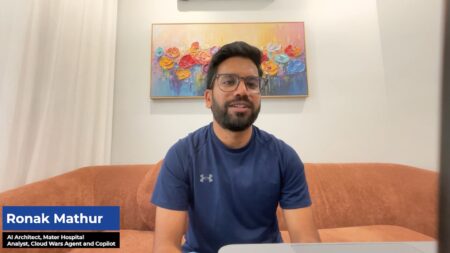
Agent technology is a critical addition to the Microsoft stack: it keeps everything moving without nudges, reminders, or bottlenecks, resulting in an organization in motion rather than in queues.
Microsoft Principal Solution Architect Dewain Robinson does a deep dive on new Copilot Studio features — and their benefits — that were introduced at last month’s Ignite conference.

Avanade draws on extensive customer engagements to deliver agentic AI platform with pre-built AI agents and templates to accelerate launch and scaling of AI.

Expanding its commitment to Model Context Protocol, Microsoft details new servers that give AI agents simplified access to services in key development and data management platforms.
On the first day of Ignite, Microsoft rolls out a raft of software tools to help customers manage their expanding rosters of AI agents while avoiding sprawl and data risks that can arise in the AI era.