
A cautionary look at AI adoption, highlighting how poorly chosen use cases and immature implementations can create more operational disruption than business value.
A cautionary look at AI adoption, highlighting how poorly chosen use cases and immature implementations can create more operational disruption than business value.

Addition to the company’s governance control plan eliminates a wide range of manual steps required to transition an agent from local usage to enterprise availability.

KPMG and Microsoft are expanding their partnership to help enterprises deploy agentic AI at scale through standardized governance, deployment, and management frameworks.

Company previously relied on a patchwork of systems and processes, which it fixed through centralization. Now it’s tapping AI to create a simple guided experience that takes burden off employees and administrators.

Work IQ offers significant value out of the box, capturing 80% of an organization’s operations without additional setup and addressing one of Copilot’s biggest shortcomings.

Mustafa Suleyman believes AI progress is accelerating dramatically, with model-training compute expected to increase another thousand-fold over the next three years.
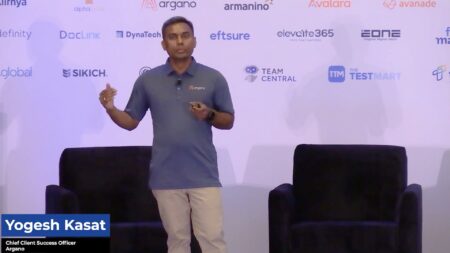
Yogesh Kasat explains why enterprise AI adoption succeeds when organizations begin with practical use cases, measurable ROI, and hands-on experimentation.

Microsoft is testing new AI-powered workplace devices under Project Solara, aiming to create agent-first experiences that move AI interactions beyond traditional PCs and applications.

Security blunders, failing to adhere to brand voice, and over-emphasizing outputs rather than results are three ways that sales and marketing teams can go awry with AI.
Christopher Lochhead explores how AI shifts the future of work from knowledge accumulation to value creation, arguing that success in the AI era depends on using individual strengths to create impact at scale.
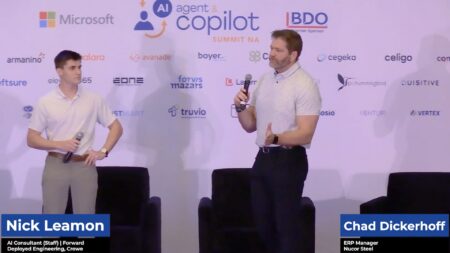
Nick Leamon and Chad Dickerhoff explain how AI sales order agents automate manual workflows, translating customer requests directly into ERP-ready business operations.

With autopilots, Scout and WorkIQ, Microsoft is building a memory layer for the entire agent technology stack.

Copilot Cowork’s usage-based model is a clear indicator of the AI pricing model growing up, as Microsoft and other enterprise providers put a meter on coworkers.
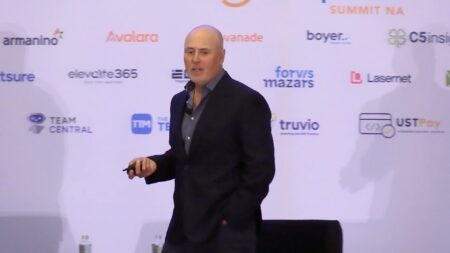
Christopher Lochhead explains why AI is commoditizing knowledge and execution, making creativity and differentiation the most valuable assets in business.

Open Knowledge Format, or OKF, aims to become the MCP of representing knowledge and context so it can be consumed easily by AI agents without a translation layer.
False claims, generic content, and AI-driven relationships are surefire sales and marketing missteps that will get your business thrown “off the pitch.”
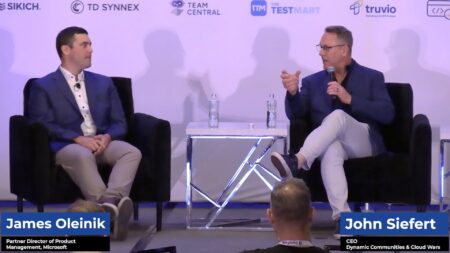
James Oleinik explains how enterprises can scale AI by combining centralized governance with business-led innovation and operational flexibility.
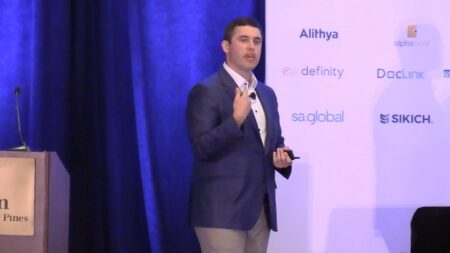
James Oleinik explains how Microsoft Entra and Purview provide identity, observability, and centralized governance for managing enterprise AI agents at scale.

Latest release of agent-building platform bolsters orchestration in complex workflows, simplifies integration by tapping Model Context Protocol (MCP).

Microsoft’s first ‘autopilot’ ushers in an era where IT and business leaders must decide what an always-on agent can touch, act on, and bring to users’ attention.