

AI is dramatically accelerating software development, but Cedric Wells argues that organizations must balance rapid innovation with architecture, security, governance, and quality assurance to safely move AI-generated solutions into production.
AI is dramatically accelerating software development, but Cedric Wells argues that organizations must balance rapid innovation with architecture, security, governance, and quality assurance to safely move AI-generated solutions into production.

AI is transforming enterprise implementation by using industry templates, Microsoft FastTrack methodologies, and AI-driven workflows to reduce complexity, speed up delivery, and improve post-sales execution.

New security features include agent inventory, threat detection for core AI tools, and automated investigations that isolate legitimate threats at scale.

Purview, Defender, and Graph API are all being enhanced to bring agents running on end-user devices under unified governance ‘control plane.’

Ideas on how to differentiate partners’ services: they can tap AI to help manufacturers reduce quoting delays or improve project reporting for professional services clients.

Cecilia Flombaum and John Scandar explain how AI is reshaping enterprise sales cycles, with increased focus on governance, ROI, and the convergence of business applications and modern work platforms.
Autonomous agent or ‘autopilot’ – touted for executing high-level autonomous tasks – now offers improved usability and model choice.

The AI Deployment Wars are expanding beyond technology into branding. Microsoft’s ambitious Frontier Company contrasts sharply with AWS’s practical Forward Deployed Engineering, raising questions about which message resonates with enterprise executives.

The simultaneous maturation of skill, governance, and pricing mirrors the evolution of cloud infrastructure; no major rebuild is required for Microsoft customers.
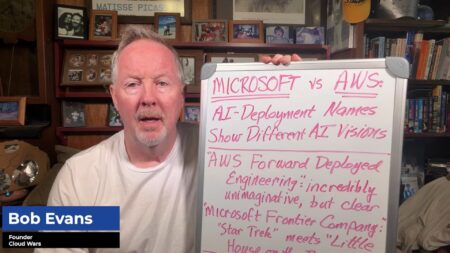
Welcome to the Cloud Wars Agent and Copilot Minute — your daily cloud news and commentary show. Each episode provides…

Thales Teixeira shows how AI enables companies to evolve from product vendors into strategic business partners.

Thales Teixeira shares a practical framework for deploying customer-centric AI agents, highlighting the common implementation mistakes organizations should avoid and the strategies that turn AI into a true competitive advantage.

Solgari’s Ed Grant explains why customer engagement data is the foundation of successful AI strategies and how organizations are turning conversations into business outcomes.

Microsoft enhancements to key security platforms bring shadow AI and other app/data types under unified controls with the rest of the corporate data estate.

The new AI Deployment Wars reveal that enterprise customers need more than technology: they need strategy, process modernization, secure integration, and change management.
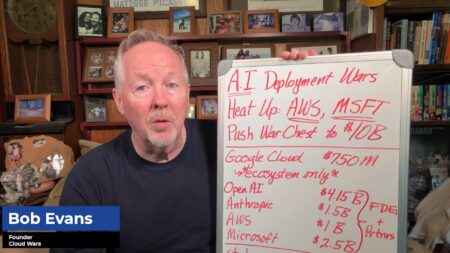
The world’s leading AI companies are investing nearly $10 billion to ensure AI deployments generate measurable business outcomes rather than simply impressive technology.

From intrusion detection analysis to security policy enforcement, customers report low confidence in agentic AI to help protect against today’s threats.

Everyday users can still benefit from Copilot and Claude, but heavy-duty, long-running AI tasks should be managed by experts who understand how to optimize AI usage.

Microsoft is accelerating its Frontier Firm vision with a new business unit that embeds 6,000 AI and industry experts directly with customers to build, optimize, and scale enterprise AI systems.

Dona Sarkar argues that most AI failures stem from unclear business objectives and poor data quality rather than limitations in the technology itself.