
In their highlights from AI Agent and Copilot Summit, Ronak Mathur and Marie Wiese note the importance of ongoing human involvement, as well as the opportunity for partners to provide licensing guidance while building trust.
In their highlights from AI Agent and Copilot Summit, Ronak Mathur and Marie Wiese note the importance of ongoing human involvement, as well as the opportunity for partners to provide licensing guidance while building trust.

The company and ISV partners deliver agents that inject new functions into Copilot, Defender, and other Microsoft platforms, driving significant growth in the security ecosystem.
In their highlights from AI Agent and Copilot Summit, Kenny Mullican and WIll Hawkins explain the value of support for third-party tools, note the need for greater interoperability in the Microsoft stack.
The future — where users can describe outcomes in English and use AI to bridge intent and execution — isn’t limited to one AI tool. The real win comes when you use the right tool for the right work.
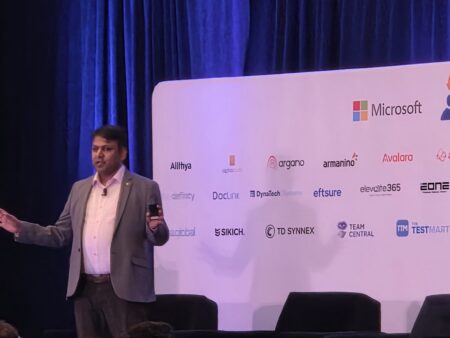
More than 650,000 ERP actions can be executed automatically by agents as a result of Microsoft’s expanding portfolio of MCP servers for Dynamics 365.

Dona Sarkar calls out the “tech bro”-driven AI hype machine and shares a blueprint to push AI into mainstream use cases that will deliver on the tech’s considerable promise.
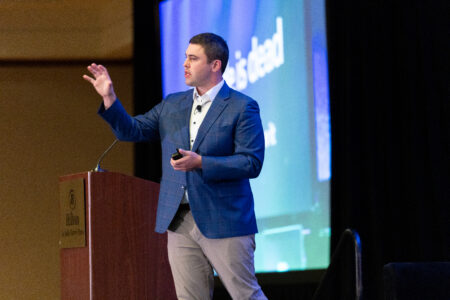
WorkIQ-powered Copilot Cowork orchestrates complex tasks to the point that agents could take over one-fifth of any team’s work in the near term, while hastening the end of app-driven workflows.

The Microsoft ecosystem is designed to scale in layers, so users should start with productivity, move into automation, and then expand into enterprise agents and intelligence. Understanding this progression will yield better, faster outcomes.
Anthropic Claude-powered feature headlines Copilot Wave 3 announcement. Other enhancements include app-native Copilots and the Microsoft 365 E7 ‘Frontier Suite.’

New AI features deliver notable enhancements to five types of SharePoint content while the UX is refreshed and agentic AI strengthens governance.
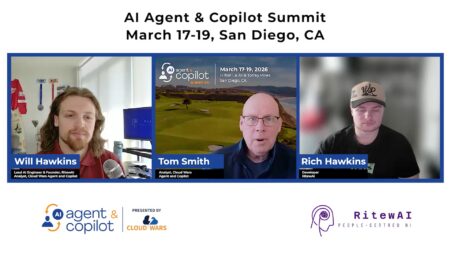
Framework lets users and developers bring their own models, supports both A2A and MCP for seamless integration of diverse AI tools, Will Hawkins and Rich Hawkins note.

Because Microsoft controls identity, productivity, business apps, and cloud infrastructure, intelligence runs across the entire stack, creating a decision layer embedded throughout the enterprise.

CIOs need secure foundations, enterprise agreements, and clear data classification policies when it comes to AI tools. The solution: deliberate paths for specialization.

Security Dashboard for AI is built to rein in AI sprawl with Defender, Entra, and Purview integration as well as inventory functions that span Microsoft and widely used third-party AI software.
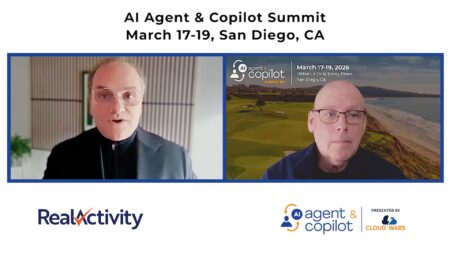
Healthcare leader says AI and multi-cloud underpin customers’ mission-critical systems so they must be prepared for potential model changes.

AI models can classify and analyze content to assess whether it is likely to be machine-generated, aiding in detection at scale. The Microsoft stack support a fraud-resistant-by-design security posture.

Industries such as healthcare can benefits from OneDrive agents grounded in internal policies, procurement, and workflows, thereby supporting entire teams at scale.

Microsoft makes good on its commitment to give access the broadest range of AI models while expanding customer-centric collaboration with Anthropic, whose models excel in enterprise applications.

In the absence of a dedicated data expert, AI compressed what could have been a multi-day investigation into about an hour, then humans resolved the Fabric overload.
Security teams are gaining extended visibility to understand conditions across lengthy time periods, ushering in what Microsoft is calling the Agentic SOC era.