

IQ Solution Accelerator brings together signals from customers, product inventory, and suppliers to detect and rapidly respond to supply chain challenges.
IQ Solution Accelerator brings together signals from customers, product inventory, and suppliers to detect and rapidly respond to supply chain challenges.
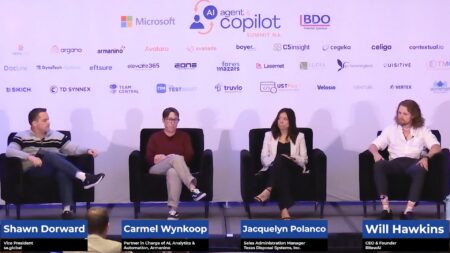
Carmel Wynkoop of Armanino explores how organizations can redesign work so people and AI work together to unlock new possibilities and create greater value.

Microsoft is targeting CRM vendor lock-in with Dynamics 365 Activate, an AI-powered migration tool designed to make moving from Salesforce faster, simpler, and less risky.

Enterprise AI adoption depends on building employee trust, positioning AI as an augmentation tool, and providing workers with the right AI tools to succeed.

Claude for Financial Advisors adds to an expanding set of industry-optimized AI software that automates and streamlines core functions performed by financial pros.
AI infrastructure spending is surging to $2.59 trillion, but rising compute and memory costs are putting pressure on cash flow and forcing hyperscalers to rethink AI investment.

Microsoft is bringing OpenAI’s GPT-6 Astra to Foundry, combining advanced agentic capabilities with enterprise security, compliance, governance, and identity controls.

ChatGPT for Financial Services was developed in partnership with investment bankers Morgan Stanley and Evercore. Customers can access key data sources without configuring connectors.

AI infrastructure spending is reaching unprecedented levels, but rising CapEx is beginning to outpace cash flow, raising questions about how hyperscalers will fund continued AI investment.
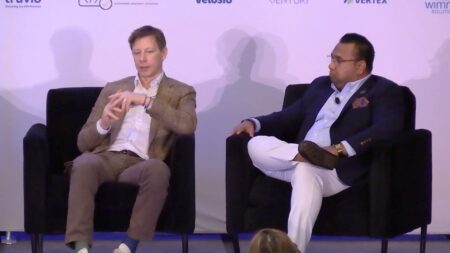
Tom Gerdes explains why cross-functional data governance is critical for uncovering hidden data risks and establishing the processes needed to address them as AI expands access to enterprise information.

AI isn’t killing software; instead it’s filling gaps between commercial systems. The more products you bought, the more gaps you had.

AI model releases are accelerating faster than buyers can adopt them, creating model fatigue and increasing pressure for deeper integration and value.

New functions can support apps that combine Dynamics 365 apps with business context from WorkIQ for complete experiences, Microsoft partners say.

As AI becomes more powerful and autonomous, Microsoft is expanding its responsible AI approach with stronger access controls, agent monitoring, telemetry, memory management and safeguards designed to address increasingly complex interactions between models, tools, data and users.

CJ Combs explains how cross-functional data governance can help enterprises uncover hidden data risks, establish accountability, and build processes to remediate them.

OpenAI’s decision to wind down its Cursor contract highlights how trust between technology providers is becoming increasingly critical as the AI ecosystem grows more interconnected.

Matt Petersen of Microsoft explains how MCP and headless business applications are helping distributors quickly build industry-specific AI agents to fill functionality gaps securely and at scale.

Experts including forward-deployed engineers (FDEs) are deemed key factor in accelerating outcomes, reducing risk, and ensuring operational impact of AI.

Customers increasingly wonder whether communications, statistics, and research were reviewed by people, driving the need for published AI policies to build trust.

‘Project HydraFusion’ evaluates each request and chooses the least complex workflow required, using additional model calls only when it anticipates a better result.