

Microsoft has introduced the first fully integrated learning agent for students, shifting AI in education from reactive tutors to proactive guidance. With Understand, Practice, and Study modes, this agent actively structures how students learn.
Microsoft has introduced the first fully integrated learning agent for students, shifting AI in education from reactive tutors to proactive guidance. With Understand, Practice, and Study modes, this agent actively structures how students learn.

Because Microsoft controls identity, productivity, business apps, and cloud infrastructure, intelligence runs across the entire stack, creating a decision layer embedded throughout the enterprise.

Recent events in the US and Canada highlight the privacy-public safety dichotomy, as well as questions on the responsibility of AI firms in sharing signals of future harm.

Herain Oberoi highlighted two fundamental AI-Era cybersecurity questions: Can we trust the data, and is the AI system safe and secure? These concerns underpin Microsoft’s integrated governance and security strategy.
Mustafa Suleyman predicts AI will achieve human-level performance across most professional tasks within 18 months, signaling massive disruption — and opportunity — for white-collar workers.

CIOs need secure foundations, enterprise agreements, and clear data classification policies when it comes to AI tools. The solution: deliberate paths for specialization.

New products deliver visibility, governance, and data protection controls over agents built internally as well as those from Microsoft and third parties.
Microsoft researchers uncover AI memory poisoning attacks that embed hidden instructions in “Summarize with AI” buttons, potentially biasing enterprise AI recommendations.

In today’s adoption ‘gray zone,’ Microsoft partners need to consider AI’s impact on work and roles, expanding their focus beyond technology.
Scaling AI agents in 2026 requires autonomy, orchestration, and strong governance — not just building more bots.

Many companies are offering only surface-level reskilling, with few providing a long-term vision for human roles in AI-driven businesses.

Healthcare leader says AI and multi-cloud underpin customers’ mission-critical systems so they must be prepared for potential model changes.

AI models can classify and analyze content to assess whether it is likely to be machine-generated, aiding in detection at scale. The Microsoft stack support a fraud-resistant-by-design security posture.

The Publisher Content Marketplace aims to solve both monetization and credibility challenges in AI by enabling structured licensing agreements between publishers and AI developers.

Industries such as healthcare can benefits from OneDrive agents grounded in internal policies, procurement, and workflows, thereby supporting entire teams at scale.

Product architect Nik Kale explains how bringing AI and human intelligence directly into a product ensures customers receive targeted remediation content and guidance.
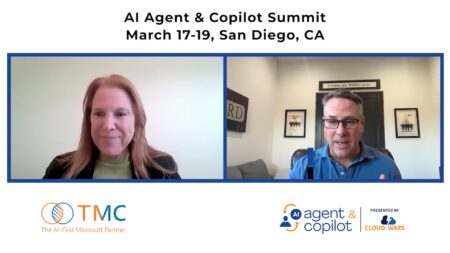
Jen Harris and John Siefert examine the shift from centers of excellence to centers of value, as AI agents automate reactive work and push humans toward more creative, proactive roles.

In the absence of a dedicated data expert, AI compressed what could have been a multi-day investigation into about an hour, then humans resolved the Fabric overload.
AI innovation is outpacing security readiness, and new data shows why governance and unified security approaches are now mission-critical.
Discover six key trends for scaling agentic AI in organizations, from end-to-end workflows and system integration to governance, model flexibility, and productivity gains.