

The future of business consulting lies in the ability to make sense of AI data and translate it into practical business strategies.
The future of business consulting lies in the ability to make sense of AI data and translate it into practical business strategies.
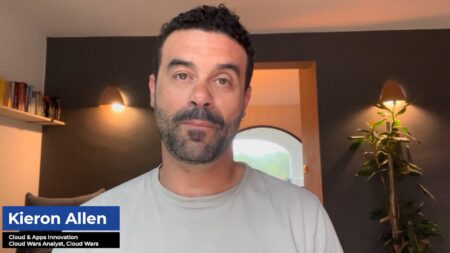
Microsoft is redefining enterprise productivity by positioning Copilot, agents, and unified AI platforms as the operational backbone of next-generation “frontier firms.”
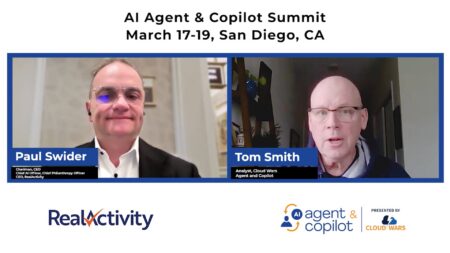
Advances from summarization to execution with AI, third-party agent marketplaces, and no-code solutions for clinical workflows top the innovations at last week’s big healthcare conference.

AI is evolving from a feature to a living, breathing ecosystem of workflows. That’s prompting customers to shift from experimenting to re-platforming.
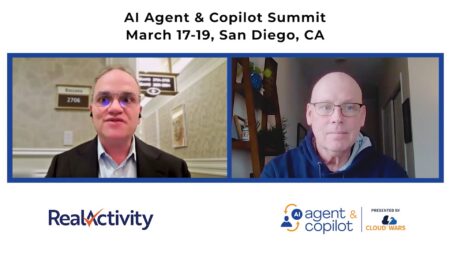
Massive Google Cloud customer use cases and the emergence of patient agency supported by AI are early highlights of HIMSS 2026, according to healthcare tech exec Paul Swider.

The Microsoft ecosystem is designed to scale in layers, so users should start with productivity, move into automation, and then expand into enterprise agents and intelligence. Understanding this progression will yield better, faster outcomes.

Anthropic Claude technology is a key underpinning of the new Microsoft Copilot Cowork as well as SharePoint AI features — reinforcing the company’s commitment to offering the best model for the job at hand.

Microsoft’s new Copilot Tasks signals a shift from AI chat to autonomous action, positioning Copilot as a personal assistant that can manage everyday tasks through natural-language commands.
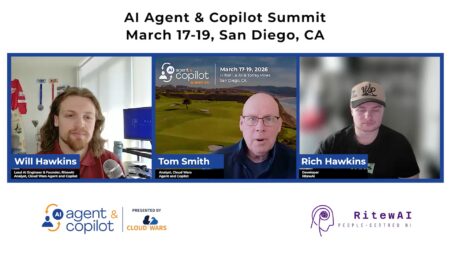
Framework lets users and developers bring their own models, supports both A2A and MCP for seamless integration of diverse AI tools, Will Hawkins and Rich Hawkins note.
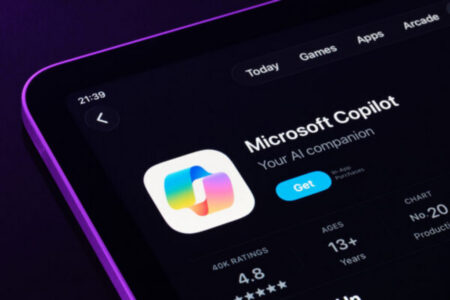
Financial services, manufacturing, and retail are leading AI agent implementation, demonstrating how operational use cases are driving measurable transformation across high-impact sectors worldwide.
Monday’s outage impacting several Claude tools was relatively brief, but it highlights the integral role of AI in modern workflows and the need for robust continuity plans.
Microsoft expands Copilot with business-process agents, tuning templates, and standalone AI assistants designed to transform workflows across sales, finance, service, and enterprise productivity.

Because Microsoft controls identity, productivity, business apps, and cloud infrastructure, intelligence runs across the entire stack, creating a decision layer embedded throughout the enterprise.

Recent events in the US and Canada highlight the privacy-public safety dichotomy, as well as questions on the responsibility of AI firms in sharing signals of future harm.

Herain Oberoi highlighted two fundamental AI-Era cybersecurity questions: Can we trust the data, and is the AI system safe and secure? These concerns underpin Microsoft’s integrated governance and security strategy.
Mustafa Suleyman predicts AI will achieve human-level performance across most professional tasks within 18 months, signaling massive disruption — and opportunity — for white-collar workers.

CIOs need secure foundations, enterprise agreements, and clear data classification policies when it comes to AI tools. The solution: deliberate paths for specialization.
Microsoft researchers uncover AI memory poisoning attacks that embed hidden instructions in “Summarize with AI” buttons, potentially biasing enterprise AI recommendations.

In today’s adoption ‘gray zone,’ Microsoft partners need to consider AI’s impact on work and roles, expanding their focus beyond technology.
Scaling AI agents in 2026 requires autonomy, orchestration, and strong governance — not just building more bots.