

As it takes on work ranging from coding to running productivity apps to combining existing AI experiences, Copilot emerges as the driver of an expanding range of business activities.
As it takes on work ranging from coding to running productivity apps to combining existing AI experiences, Copilot emerges as the driver of an expanding range of business activities.
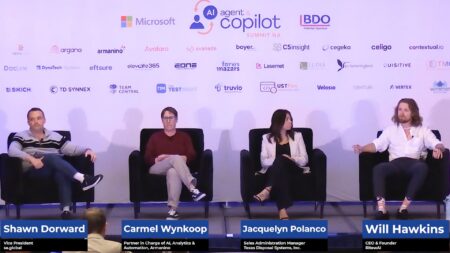
Will Hawkins explains how AI can serve as a “second brain” for career development, helping people define who they want to become and build the skills and expertise to get there.

Customers will be able to use Copilot to update a record in a CRM system or turn a support escalation email into a ticket within a project tracker.
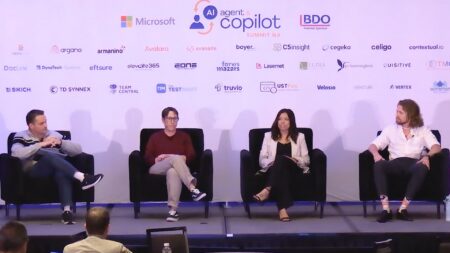
Jacquelyn Polanco of Texas Disposal Systems shares how AI-powered data mining and contract tools are helping sales teams uncover leads, understand customer needs, and build organizational buy-in.

Microsoft plans to more than triple data center capacity to 38 gigawatts by 2032, highlighting the extraordinary infrastructure build-out required to meet soaring AI compute demand.

A new AI safety framework for U.S. schools prohibits student and educator data from being used for AI model training while establishing requirements for human oversight, transparency, privacy, and accountability from participating technology providers.

IQ Solution Accelerator brings together signals from customers, product inventory, and suppliers to detect and rapidly respond to supply chain challenges.
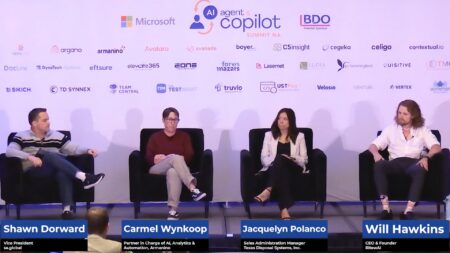
Carmel Wynkoop of Armanino explores how organizations can redesign work so people and AI work together to unlock new possibilities and create greater value.

Microsoft is targeting CRM vendor lock-in with Dynamics 365 Activate, an AI-powered migration tool designed to make moving from Salesforce faster, simpler, and less risky.

Top users redesign workflows to give agents stable processes and provide persistent context so they can perform recurring work without repeated explanations.

Enterprise AI adoption depends on building employee trust, positioning AI as an augmentation tool, and providing workers with the right AI tools to succeed.

Claude for Financial Advisors adds to an expanding set of industry-optimized AI software that automates and streamlines core functions performed by financial pros.

AI infrastructure spending is surging to $2.59 trillion, but rising compute and memory costs are putting pressure on cash flow and forcing hyperscalers to rethink AI investment.

Microsoft is bringing OpenAI’s GPT-6 Astra to Foundry, combining advanced agentic capabilities with enterprise security, compliance, governance, and identity controls.

ChatGPT for Financial Services was developed in partnership with investment bankers Morgan Stanley and Evercore. Customers can access key data sources without configuring connectors.

AI infrastructure spending is reaching unprecedented levels, but rising CapEx is beginning to outpace cash flow, raising questions about how hyperscalers will fund continued AI investment.

AI model releases are accelerating faster than buyers can adopt them, creating model fatigue and increasing pressure for deeper integration and value.

New functions can support apps that combine Dynamics 365 apps with business context from WorkIQ for complete experiences, Microsoft partners say.

As AI becomes more powerful and autonomous, Microsoft is expanding its responsible AI approach with stronger access controls, agent monitoring, telemetry, memory management and safeguards designed to address increasingly complex interactions between models, tools, data and users.

OpenAI’s decision to wind down its Cursor contract highlights how trust between technology providers is becoming increasingly critical as the AI ecosystem grows more interconnected.