

Matt Petersen of Microsoft explains how MCP and headless business applications are helping distributors quickly build industry-specific AI agents to fill functionality gaps securely and at scale.
Matt Petersen of Microsoft explains how MCP and headless business applications are helping distributors quickly build industry-specific AI agents to fill functionality gaps securely and at scale.

Experts including forward-deployed engineers (FDEs) are deemed key factor in accelerating outcomes, reducing risk, and ensuring operational impact of AI.

Customers increasingly wonder whether communications, statistics, and research were reviewed by people, driving the need for published AI policies to build trust.

‘Project HydraFusion’ evaluates each request and chooses the least complex workflow required, using additional model calls only when it anticipates a better result.
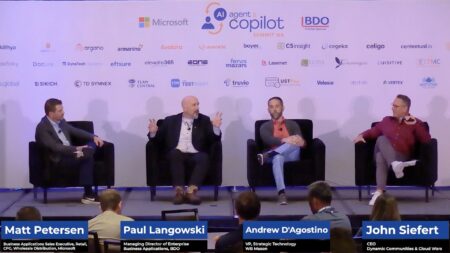
Paul Langowski of BDO explains why effective enterprise AI governance requires enabling secure, sanctioned AI use rather than simply blocking access to public tools.

Microsoft’s strategic collaboration with Saudi AI company HUMAIN demonstrates how localized language models could become central to enterprise AI adoption across the Middle East and Africa.

Product provides budgets, guardrails, and lock triggers to actions taken by AI agents. Can organizations define clear limits and policies to make use of those controls?

Meta’s massive Azure spending shows how AI is reshaping tech competition, with rivals increasingly becoming customers as infrastructure emerges as the new battleground.

Instead of searching across laboratory results, medications, and specialist documentation, clinicians can prompt Epic and receive required information inside ChatGPT using new OpenAI connector.
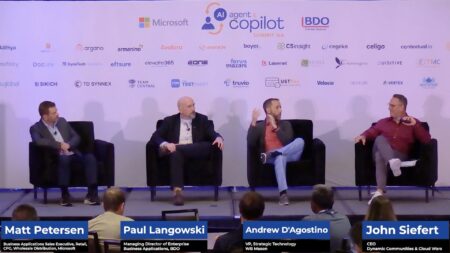
Andrew D’Agostino explains how AI-driven development is accelerating application creation while shifting the enterprise challenge from managing code to governing dependencies across core systems and rapidly built apps.
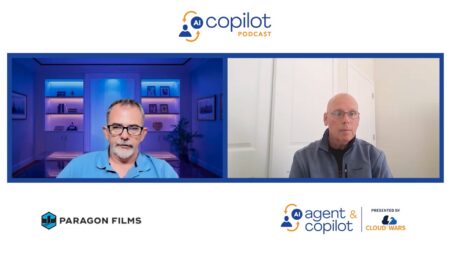
CIO Kenny Mullican notes that vertical AI platforms from Google Cloud eliminate the need for building custom interfaces and make it easier to roll out industry-specific use cases.
New tools aimed at enforcing cost discipline include an AI pricing calculator, detection of spending anomalies, and spending caps for individual AI projects.
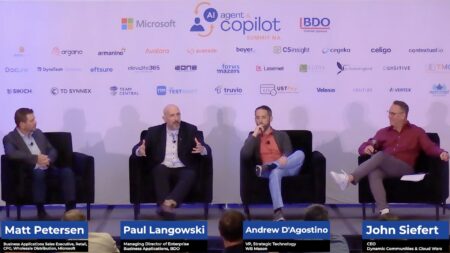
Paul Langowski of BDO explains how AI agents can move beyond traditional forecasting to uncover external signals, anticipate demand, and enable new business capabilities.
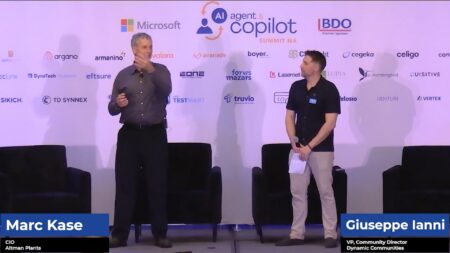
Altman Plants is connecting enterprise data and systems through AI, MCP, and Microsoft Fabric to give employees faster access to insights and improve complex decision-making.

Most enterprises face similar internal struggles, as they struggle to track what data is being used by SaaS vendors and consumer AI tools used by employees.
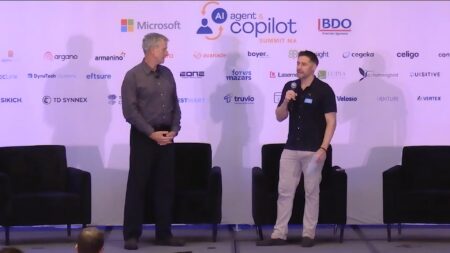
Altman Plants is using AI experimentation and a test-and-learn approach to solve complex data-matching challenges, reduce EDI errors, and reclaim hours of daily work.

Law firms that collaborated in platform design highlight industry AI opportunities to eliminate manual work and drive innovation for better client service.

Microsoft, Salesforce, and UiPath are taking different approaches to free developer AI capacity as consumption emerges as an increasingly important metric for the enterprise technology industry.

On the strength of customer design partnerships and an expansive ecosystem, Google Cloud delivers AI platforms that could unlock AI innovation in support of vertical use cases.

AI monetization is moving upstream as rising agentic development costs push Microsoft and other vendors to charge builders for creating, testing, and executing AI-powered products.