

Microsoft’s Copilot Acceleration Team provides a rich, open-source repository of pre-written skills for specific tasks. Users need to exercise caution because they’re not supported product features.
Microsoft’s Copilot Acceleration Team provides a rich, open-source repository of pre-written skills for specific tasks. Users need to exercise caution because they’re not supported product features.

Let agents discover and reason through the work, move repeatable parts into deterministic automation, and then use the agent as a supervisor and exception handler.
Upgrades include automatically created documents and files, as well as interactive reports. Approvals and other repeatable work can be handled through automation.

Fabric Apps automatically build a real database, working API, and authentication through existing Microsoft accounts. Plus, users can tap into their choice of AI coding tools.

Purview, Defender, and Graph API are all being enhanced to bring agents running on end-user devices under unified governance ‘control plane.’

Everyday users can still benefit from Copilot and Claude, but heavy-duty, long-running AI tasks should be managed by experts who understand how to optimize AI usage.

Financial disclosures and spend controls for customers highlight a key point: AI winners apply cost models and strict governance; reactively managing costs is a losing proposition.

Work IQ offers significant value out of the box, capturing 80% of an organization’s operations without additional setup and addressing one of Copilot’s biggest shortcomings.

Open Knowledge Format, or OKF, aims to become the MCP of representing knowledge and context so it can be consumed easily by AI agents without a translation layer.

The ed-tech company Chegg is a cautionary tale of how traditional business strengths can be rapidly undercut as AI technology advances.

The bifurcation between AI-native and AI-bolted-on organizations is becoming more apparent as the AI-centric approach’s benefits come into sharper focus.

Word, Excel, and PowerPoint integrations, plus Copilot Cowork, bring AI-driven actions to the fore and make Copilot worth another look for those who were disappointed.
Skills codify workflow details that are too often managed as ‘institutional knowledge,’ making those instructions accessible and reusable for agentic AI automation.

Companies need to apply their philosophy to AI initiatives to drive success; optimal use of the Microsoft stack can create a strong philosophical foundation.
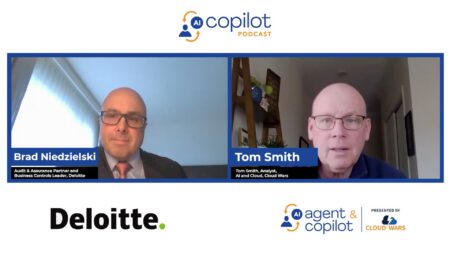
Deloitte partner says most organizations are still in the transition phase of tapping AI in their ERP environments, but the technology can improve data consistency and improve financial compliance.

Leaders have a choice with AI; get really fast at fixing things or start building systems that don’t require you in the first place.

Updates include learned context and skills that get applied to future sessions as well as automatically created content that adheres to corporate standards.

Recent studies highlight the need to invest in AI for long-term strategic benefits — including driving enterprise transformation — where traditional ROI measurements may not apply.

Toolkit acts as a gatekeeper, preventing unauthorized access by AI agents and addressing top risks including goal hijacking and memory poisoning.
Latest MCP product from Microsoft works with cloud or on-premises SQL databases for efficient, secure connections to corporate resources without requiring language or framework expertise.