

In a fireside chat with John Siefert, Naveen Agrawal explains how AI agents are helping businesses proactively manage tax compliance, automate tax recommendations, and simplify complex regulations.
In a fireside chat with John Siefert, Naveen Agrawal explains how AI agents are helping businesses proactively manage tax compliance, automate tax recommendations, and simplify complex regulations.

Data breaches hit hardest in healthcare and financial services, while the firms that tap AI most aggressively are focusing on hunting threats and automating attack responses.

Project Perception scales vulnerability discovery for today’s AI-powered threats. Initially available in Defender, Perception will extend across the company’s security lineup.

John Siefert and David Chao explain why enterprise AI adoption succeeds through small wins, strong governance, and continuous expansion rather than large-scale transformation projects.

Users can securely connect information from Apple Health and supported medical records for detailed personal medical insights and reduced need to upload data or explain details.

Microsoft says AI sovereignty is about maintaining national control while embracing the world’s best AI technologies, rather than isolating countries from global innovation.

As defined by Databricks, a context decides what an agent sees, in what form, at what fidelity, and at what moment to ensure it performs its intended tasks.

John Siefert argues that in the AI era, competitive advantage comes from being different rather than simply being better, as agents increasingly automate execution.
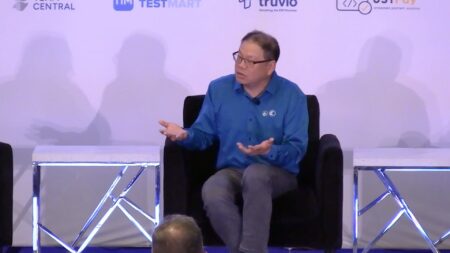
David Chao explains why AI partners must differentiate through expertise, practical business value, and collaboration rather than simply reselling technology.

Customers will be able to capitalize on data from ZoomInfo, Dun & Bradstreet, Gong, and others in the flow of their Dynamics 365 sales processes.

Upgrades include automatically created documents and files, as well as interactive reports. Approvals and other repeatable work can be handled through automation.

Microsoft’s latest education findings reveal that AI access is no longer the hurdle—effective implementation and structured training are.

In a fireside chat with John Siefert, Dewain Robinson explains how reasoning models are transforming Copilot Studio into an intelligent orchestration platform for enterprise AI.

Users can create event-driven tasks spanning Teams chats, Outlook email, and meetings, bringing Cowork’s promised automation across complex workflows closer to reality.

Fabric Apps automatically build a real database, working API, and authentication through existing Microsoft accounts. Plus, users can tap into their choice of AI coding tools.

In a fireside chat with John Siefert, Dewain Robinson, Principal Copilot Architect at Microsoft, explains how Copilot skills and reasoning models are transforming automation into adaptive, self-improving systems.
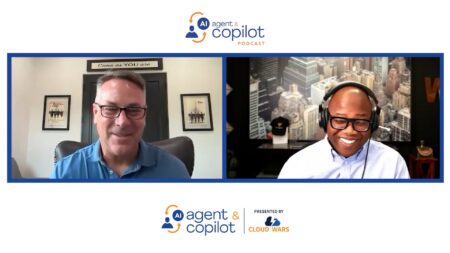
AI is dramatically accelerating software development, but Cedric Wells argues that organizations must balance rapid innovation with architecture, security, governance, and quality assurance to safely move AI-generated solutions into production.

AI is transforming enterprise implementation by using industry templates, Microsoft FastTrack methodologies, and AI-driven workflows to reduce complexity, speed up delivery, and improve post-sales execution.

New security features include agent inventory, threat detection for core AI tools, and automated investigations that isolate legitimate threats at scale.

Purview, Defender, and Graph API are all being enhanced to bring agents running on end-user devices under unified governance ‘control plane.’