

AI infrastructure spending is reaching unprecedented levels, but rising CapEx is beginning to outpace cash flow, raising questions about how hyperscalers will fund continued AI investment.
AI infrastructure spending is reaching unprecedented levels, but rising CapEx is beginning to outpace cash flow, raising questions about how hyperscalers will fund continued AI investment.

AI model releases are accelerating faster than buyers can adopt them, creating model fatigue and increasing pressure for deeper integration and value.

New functions can support apps that combine Dynamics 365 apps with business context from WorkIQ for complete experiences, Microsoft partners say.

As AI becomes more powerful and autonomous, Microsoft is expanding its responsible AI approach with stronger access controls, agent monitoring, telemetry, memory management and safeguards designed to address increasingly complex interactions between models, tools, data and users.

OpenAI’s decision to wind down its Cursor contract highlights how trust between technology providers is becoming increasingly critical as the AI ecosystem grows more interconnected.

Matt Petersen of Microsoft explains how MCP and headless business applications are helping distributors quickly build industry-specific AI agents to fill functionality gaps securely and at scale.

Customers increasingly wonder whether communications, statistics, and research were reviewed by people, driving the need for published AI policies to build trust.

‘Project HydraFusion’ evaluates each request and chooses the least complex workflow required, using additional model calls only when it anticipates a better result.

Microsoft’s strategic collaboration with Saudi AI company HUMAIN demonstrates how localized language models could become central to enterprise AI adoption across the Middle East and Africa.

Meta’s massive Azure spending shows how AI is reshaping tech competition, with rivals increasingly becoming customers as infrastructure emerges as the new battleground.
CIO Kenny Mullican notes that vertical AI platforms from Google Cloud eliminate the need for building custom interfaces and make it easier to roll out industry-specific use cases.
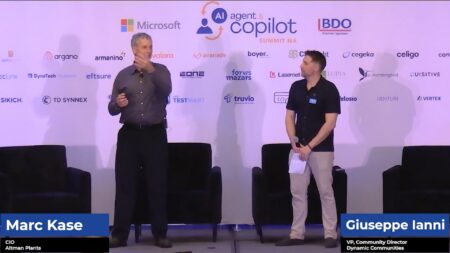
Altman Plants is connecting enterprise data and systems through AI, MCP, and Microsoft Fabric to give employees faster access to insights and improve complex decision-making.
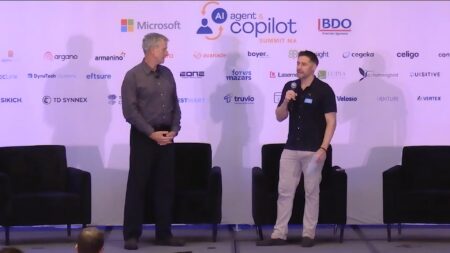
Altman Plants is using AI experimentation and a test-and-learn approach to solve complex data-matching challenges, reduce EDI errors, and reclaim hours of daily work.

Microsoft, Salesforce, and UiPath are taking different approaches to free developer AI capacity as consumption emerges as an increasingly important metric for the enterprise technology industry.

AI monetization is moving upstream as rising agentic development costs push Microsoft and other vendors to charge builders for creating, testing, and executing AI-powered products.

New features enhance positioning of Teams as a platform to support humans, agents working together to accelerate GitHub-powered dev projects.

Microsoft’s latest Copilot Studio release — including the GitHub Copilot Harness — is more of an upgrade to the engine room of enterprise agents than a simple feature update.

After proving its custom silicon strategy with Maia 200, Microsoft is preparing a much larger Maia 300 push designed to support both AI training and inference.
Skill Recorder creates a foundation for AI to understand workflows, recommend improvements, and ultimately automate workflows, for on-demand or scheduled use cases.

Identity management, data loss prevention tools work together to ensure every AI agent action can be traced to the entity that triggered it for accountability.