
Thales explains how organizations can use AI-driven competitive intelligence to identify market weaknesses, exploit operational gaps, and respond faster than competitors.
Thales explains how organizations can use AI-driven competitive intelligence to identify market weaknesses, exploit operational gaps, and respond faster than competitors.

Support for Compliance API gives Purview visibility into conversations and events, bringing both data types in Claude under broader enterprise controls.

Microsoft and EY’s expanded partnership combines AI-native engineering with business consulting to help organizations scale transformative AI initiatives.

Features for controlling the actions of agents — ensuring they don’t misbehave — bring the enterprise-level controls required by IT/security pros and business leaders alike.

James Oleinik explains how Work IQ powers Copilot with real-time enterprise context, turning AI into an intelligent execution layer for work.
James Oleinik explains how Agent 365 provides the visibility, governance, and security foundation needed to manage AI agents across the enterprise.
Sachin Gandhi explains how AI agents are transforming supply chains by autonomously planning and executing logistics operations.

Microsoft says the future of AI success depends less on individual readiness and more on organizational culture, management support, and redesigned workflows.
James Oleinik explains how Microsoft’s agentic system of work positions Copilot as the central interface while autonomous AI agents execute enterprise workflows at scale.

Microsoft provides three distinct patterns — orchestrator/specialist, MCP-based connected agents, and browser session use — for agent development; discover recommended use cases for each.
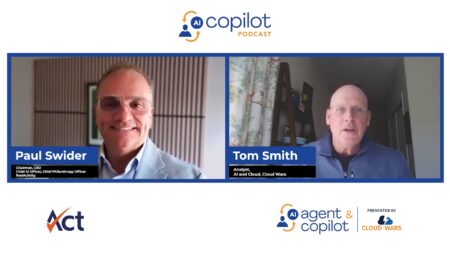
AI and Microsoft expert Paul Swider details a personal health assistant he’s built called Tula that unifies all of a patient’s data and aims to level the healthcare playing field.
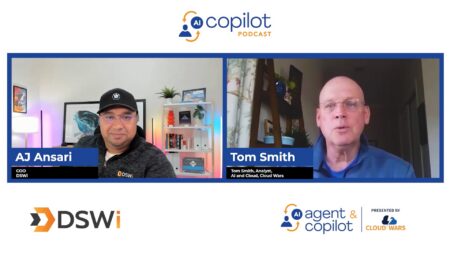
Microsoft and AI expert sorts out key pricing questions and licensing considerations for Copilot Studio-built agents, and explains why costs still pose confusion for some customers.

Word, Excel, and PowerPoint integrations, plus Copilot Cowork, bring AI-driven actions to the fore and make Copilot worth another look for those who were disappointed.
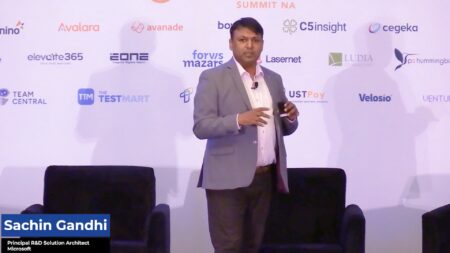
Sachin Gandhi explains how Copilot is evolving into the enterprise interface, enabling agentic workflows that automate processes and turn business data into real-time knowledge.
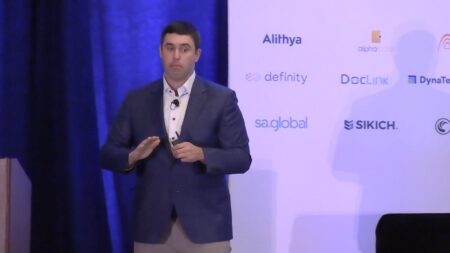
Microsoft’s James Oleinik explains how enterprise AI is shifting from a human-driven assistant to systems that independently execute work on behalf of users.

Skills codify workflow details that are too often managed as ‘institutional knowledge,’ making those instructions accessible and reusable for agentic AI automation.

Microsoft’s Dona Sarkar compares today’s AI moment to the early mobile phone era, arguing that even limited capabilities signal a transformational shift toward greater freedom and mobility through AI.

Dona Sarkar explains how the shift from generative AI to agentic AI is redefining enterprise systems through self-correcting, multi-agent collaboration.

Microsoft and OpenAI restructure their landmark partnership, enabling broader competition while maintaining strategic ties, signaling a major shift in how AI alliances will evolve across the global cloud ecosystem.

The amended partnership shows both companies are evolving; it’s not a falling out. The question for organizations is whether they are ready to make similar strategic shifts to focus on governance and outcomes.