

IQ Solution Accelerator brings together signals from customers, product inventory, and suppliers to detect and rapidly respond to supply chain challenges.
IQ Solution Accelerator brings together signals from customers, product inventory, and suppliers to detect and rapidly respond to supply chain challenges.

Top users redesign workflows to give agents stable processes and provide persistent context so they can perform recurring work without repeated explanations.

AI isn’t killing software; instead it’s filling gaps between commercial systems. The more products you bought, the more gaps you had.

Customers increasingly wonder whether communications, statistics, and research were reviewed by people, driving the need for published AI policies to build trust.
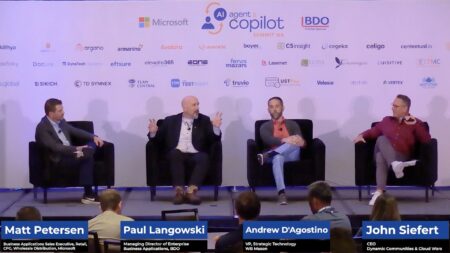
Paul Langowski of BDO explains why effective enterprise AI governance requires enabling secure, sanctioned AI use rather than simply blocking access to public tools.

Product provides budgets, guardrails, and lock triggers to actions taken by AI agents. Can organizations define clear limits and policies to make use of those controls?
Instead of searching across laboratory results, medications, and specialist documentation, clinicians can prompt Epic and receive required information inside ChatGPT using new OpenAI connector.
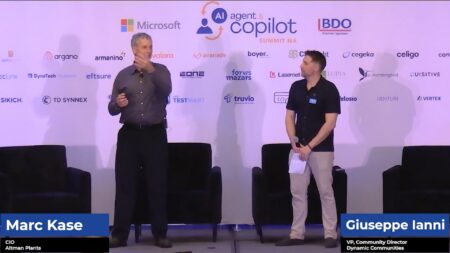
Altman Plants is connecting enterprise data and systems through AI, MCP, and Microsoft Fabric to give employees faster access to insights and improve complex decision-making.

Most enterprises face similar internal struggles, as they struggle to track what data is being used by SaaS vendors and consumer AI tools used by employees.

Microsoft’s latest Copilot Studio release — including the GitHub Copilot Harness — is more of an upgrade to the engine room of enterprise agents than a simple feature update.

Consolidated AI chatbots raise order values up to 26% at Albertsons, while WalMart’s in-store AI use requires employees to further train AI models with business context.

Microsoft’s Copilot Acceleration Team provides a rich, open-source repository of pre-written skills for specific tasks. Users need to exercise caution because they’re not supported product features.

Identity management, data loss prevention tools work together to ensure every AI agent action can be traced to the entity that triggered it for accountability.

Let agents discover and reason through the work, move repeatable parts into deterministic automation, and then use the agent as a supervisor and exception handler.

Even with strong partner support, AI operating in silos will yield disconnected workstreams due to the lack of a single point of governance and accountability.

July updates extend the company’s commitment to make a range of AI models and choices available to users. Models from OpenAI and Anthropic have been added.

Certification paths combined with AI platform-wide bet on governance steer customers to adopt existing frameworks and avoid creating technical debt.
Users can securely connect information from Apple Health and supported medical records for detailed personal medical insights and reduced need to upload data or explain details.

As defined by Databricks, a context decides what an agent sees, in what form, at what fidelity, and at what moment to ensure it performs its intended tasks.

Customers will be able to capitalize on data from ZoomInfo, Dun & Bradstreet, Gong, and others in the flow of their Dynamics 365 sales processes.